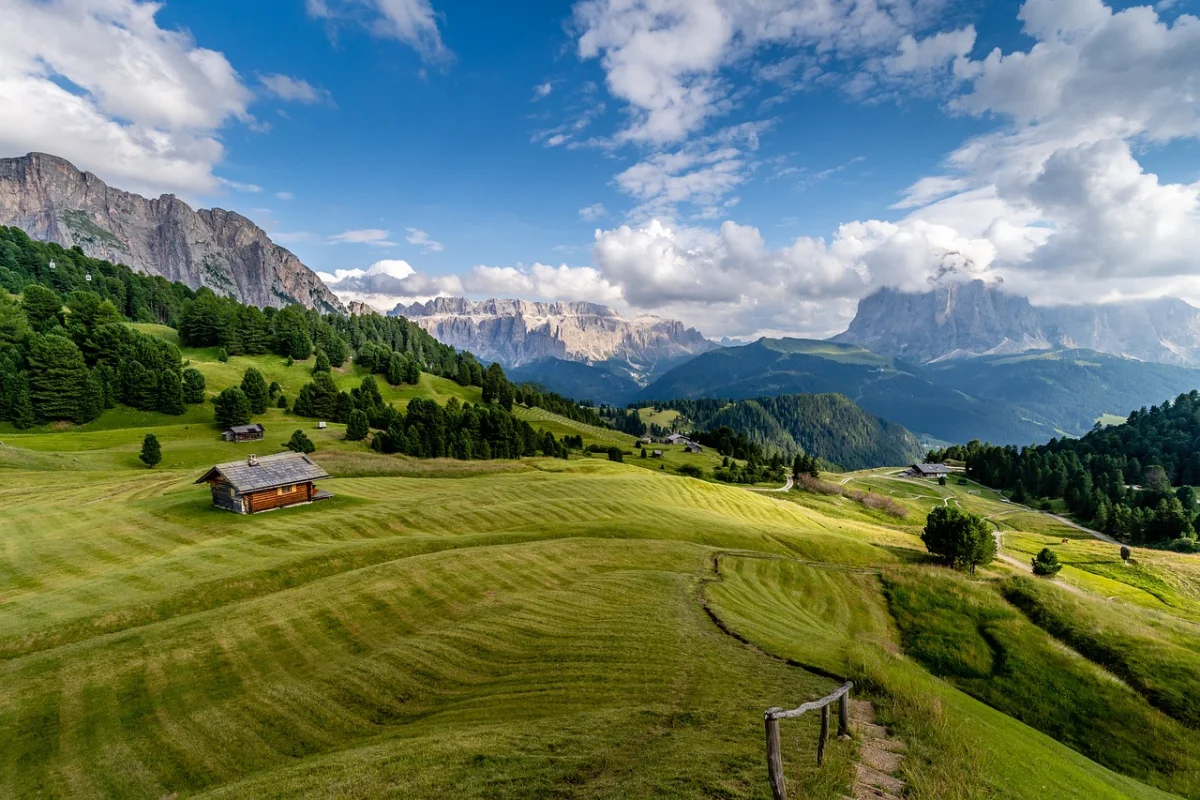
Choosing where to stay in the Dolomites is not simply a matter of finding the prettiest village. The region is larger and more fragmented than it first appears, with separate valleys divided by mountain passes, high plateaus and slow roads.
A hotel that looks central on a map may still leave you driving for hours each day. Meanwhile, the right base can place cable cars, trailheads, mountain buses and restaurants within walking distance.
For most hiking trips, it is better to explore one part of the Dolomites properly than to spend every morning driving toward a different famous viewpoint. The best base depends on whether you want lift-assisted walks, demanding mountain routes, public transport, quiet evenings or easy access to the most photographed landscapes.
This guide compares seven of the best places to stay in the Dolomites for hiking, including their strongest trails, transport options and main disadvantages.
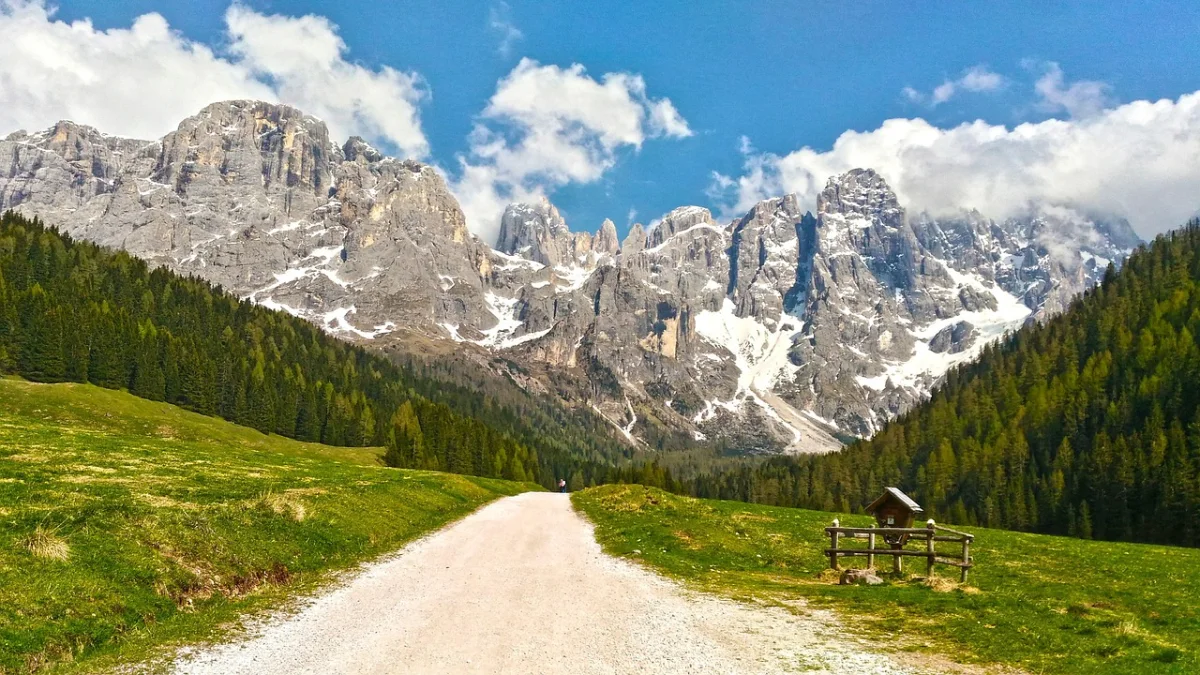
Choose the hikes first and the hotel second. The right base saves hours of driving and makes weather changes easier to manage.
Dolomites Hiking Bases Compared
| Base | Best for | Car needed? | Main advantage | Main drawback |
|---|---|---|---|---|
| Ortisei | First-time visitors and lift-assisted hiking | Not essential | Excellent lifts, buses and village facilities | Popular and often expensive |
| Cortina d’Ampezzo | Iconic eastern Dolomites hikes | Helpful | Access to an exceptional variety of famous routes | Trailheads are spread around a large area |
| Corvara | Sella, Puez and Alta Badia | Optional | Central position and strong lift network | Premium prices in peak season |
| Canazei | Active hikers wanting several mountain groups | Helpful | Access to Sella, Sassolungo, Marmolada and Val di Fassa | Busy roads and a more resort-like atmosphere |
| Dobbiaco | Public transport, Tre Cime and Alpine lakes | Often unnecessary | Train, hiking buses and excellent regional connections | Fewer major hikes begin directly in town |
| Arabba | Serious mountain days and quieter stays | Helpful | High elevation and fast access to rugged terrain | Smaller village with fewer rainy-day options |
| San Martino di Castrozza | Pale di San Martino and fewer crowds | Helpful | Dramatic scenery and direct lift access | Less convenient for the central Dolomites |
01 · Val GardenaOrtisei: The Best Overall Base for a First Dolomites Hiking Trip
Ortisei is the easiest recommendation for visitors who want a comfortable first introduction to hiking in the Dolomites.
The village sits in Val Gardena and provides direct lift access to several completely different mountain landscapes. From one side of town, you can travel toward Seceda and the Odle peaks. From another, a gondola reaches the broad meadows of Alpe di Siusi. The Resciesa funicular opens another network of panoramic trails above the village.
This variety makes Ortisei especially useful when the weather is changeable. You can choose an exposed ridge on a stable morning, a lower meadow walk when clouds are building or a short lift-assisted route when everyone needs an easier day.
Best Hikes from Ortisei
The most obvious objective is Seceda, where short scenic walks can be extended into longer routes toward the Pieralongia rock formations, Rifugio Firenze or Col Raiser.
Alpe di Siusi offers gentler terrain, long meadow walks and numerous mountain huts. It is a strong choice for relaxed hiking days, families and anyone who wants mountain views without committing to steep or exposed trails.
Resciesa provides another quieter option, including walks toward Rifugio Brogles and viewpoints above Val Gardena.
Val Gardena promotes hundreds of kilometres of marked trails, while its summer lift network connects Ortisei, Santa Cristina and Selva with several high hiking areas.
Official Val Gardena summer lift information ↗Who Should Stay in Ortisei?
Choose Ortisei when you want:
- a polished village with plenty of restaurants and accommodation;
- several hiking areas accessible without driving;
- easy and moderate walks as well as longer mountain routes;
- a convenient base for families or mixed-ability groups;
- a trip that still works well when you do not have a car.
Ortisei is also a sensible choice for couples in which one person wants demanding hikes and the other prefers shorter walks, cafés or time in the village.
The Main Drawbacks
Ortisei is no longer a quiet mountain secret. Accommodation can be expensive during the main summer weeks, and the most accessible viewpoints become busy during the middle of the day.
It is also not a good base for repeatedly visiting Cortina, Tre Cime or Lake Braies. These places may look reasonably close on a map, but the road journey crosses mountain passes and should not become a daily routine.
Where to Stay in Val Gardena
Stay in central Ortisei for the best balance of lifts, buses, restaurants and evening atmosphere.
Santa Cristina is quieter and well positioned for Col Raiser and the Sassolungo area. Selva di Val Gardena is the stronger alternative for experienced hikers who want to be closer to Passo Gardena, Dantercepies, Vallunga and the Puez–Odle Nature Park.
02 · CortinaCortina d’Ampezzo: The Best Base for the Famous Eastern Dolomites
Cortina is surrounded by an unusually large concentration of famous mountain landscapes. Tre Cime, Cinque Torri, Lagazuoi, Croda da Lago, Lake Sorapis, Tofana and the Cristallo group are all within its wider hiking region.
That makes Cortina an excellent base for travellers who have built their Dolomites wish list around specific iconic routes.
The town itself is larger and livelier than many Dolomites villages. It provides a broad choice of hotels, apartments, restaurants, outdoor shops and mountain-guide services. Several summer lifts help hikers reach high routes without completing the full ascent from the valley.
Official Cortina summer lift information ↗Best Hikes from Cortina
Cinque Torri is one of the most flexible outings. Visitors can take a lift, walk between the rock towers and explore the open-air First World War sites. The route can remain short or be extended toward Rifugio Averau and Rifugio Nuvolau.
Lagazuoi offers high-altitude scenery, historical routes and access to the Falzarego Pass area. The Tofana lifts provide another route into exposed mountain terrain above Cortina.
Other major options include:
- the hike to Lake Sorapis;
- Croda da Lago and Rifugio Palmieri;
- the Faloria and Cristallo areas;
- Val di Fanes;
- longer routes around Passo Giau;
- day trips toward Tre Cime and Misurina.
Who Should Stay in Cortina?
Cortina is best for hikers who:
- want to see the classic eastern Dolomites;
- are comfortable driving to different trailheads;
- want a large selection of moderate and demanding hikes;
- appreciate having restaurants, shops and services after hiking;
- plan to combine hiking with via ferrata or guided mountaineering.
It is particularly suitable for a first eastern Dolomites trip lasting four to seven days.
The Main Drawbacks
Cortina is a useful regional base, but many hikes do not begin in the centre. You may still need a car or bus to reach Passo Falzarego, Passo Giau, Misurina and other trailheads.
Parking restrictions, reservations and access arrangements can change on popular routes. Check the latest information rather than assuming that you can simply drive to every starting point.
Cortina can also feel busy and expensive during peak summer periods. Staying in nearby San Vito di Cadore may reduce accommodation costs, although it adds travel time to northern trailheads.
Where to Stay Around Cortina
Central Cortina works best when restaurants and evening atmosphere matter. The outskirts are often more practical for parking and early departures.
Stay near Misurina when Tre Cime, Cadini di Misurina and the surrounding lakes are your main priorities. Choose San Vito di Cadore for a quieter stay south of Cortina with access to the Antelao and Sorapiss areas.
03 · Alta BadiaCorvara: The Best Base for Alta Badia and the Sella Massif
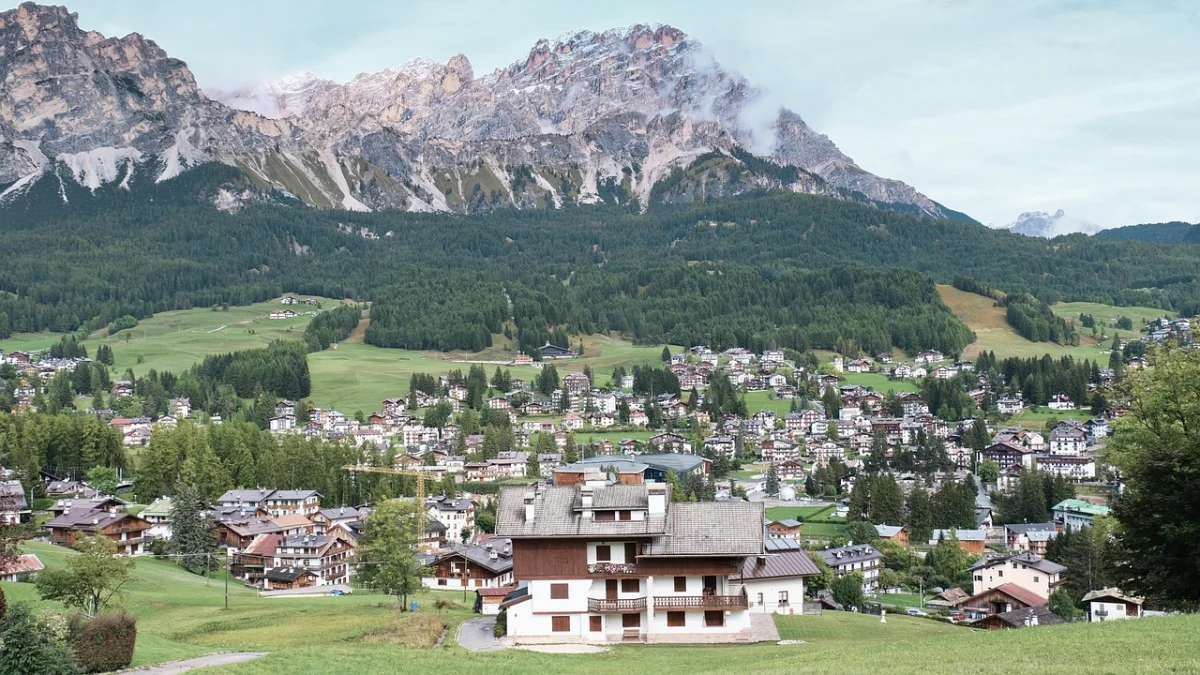
Corvara sits beneath the Sella massif in Alta Badia, close to Passo Gardena and Passo Campolongo. Its central location makes it one of the strongest bases for hikers who want varied routes without changing accommodation.
Several lifts rise directly from Corvara and nearby Colfosco. They provide access to broad plateaus, panoramic ridges and routes toward Piz Boè, Sassongher, Pralongià and the Puez–Odle Nature Park.
Alta Badia’s summer lift system also connects parts of the valley, including a lift connection between Corvara and Colfosco, reducing the need to search for parking at every outing.
Official Alta Badia summer lift information ↗Best Hikes from Corvara
Popular possibilities include:
- Sassongher from Colfosco;
- lift-assisted walks around Col Alto and Pralongià;
- routes through the Puez–Odle Nature Park;
- hikes from Passo Gardena;
- the Vallon and Piz Boè area;
- meadow and hut walks above La Villa and San Cassiano.
Passo Falzarego and Lagazuoi are also accessible for a day trip, while the villages of Alta Badia provide several easier valley and plateau walks.
Who Should Stay in Corvara?
Choose Corvara when you want:
- a central base close to several mountain passes;
- direct access to lifts and high hiking terrain;
- a mixture of relaxing hut walks and demanding mountain routes;
- excellent food and well-developed tourist services;
- the option to complete several days without using a car.
Corvara is especially good for hikers who want the convenience of Ortisei but prefer to focus on the Sella and Alta Badia rather than Seceda and Alpe di Siusi.
The Main Drawbacks
Corvara is one of the more premium destinations in the Dolomites. Hotels in the centre can be expensive, particularly when booked late for July or August.
The surrounding pass roads are also popular with drivers, motorcyclists and cyclists. Early mornings are quieter, while afternoons can bring slower traffic through the valley.
Where to Stay in Alta Badia
Corvara offers the greatest convenience and strongest village infrastructure.
Colfosco places you closer to Passo Gardena, the Puez area and Sassongher. San Cassiano has a calmer atmosphere and good access toward Fanes and Lagazuoi. La Villa is practical for exploring the wider valley and may provide more accommodation options.
04 · Val di FassaCanazei: The Best Base for High-Altitude Variety
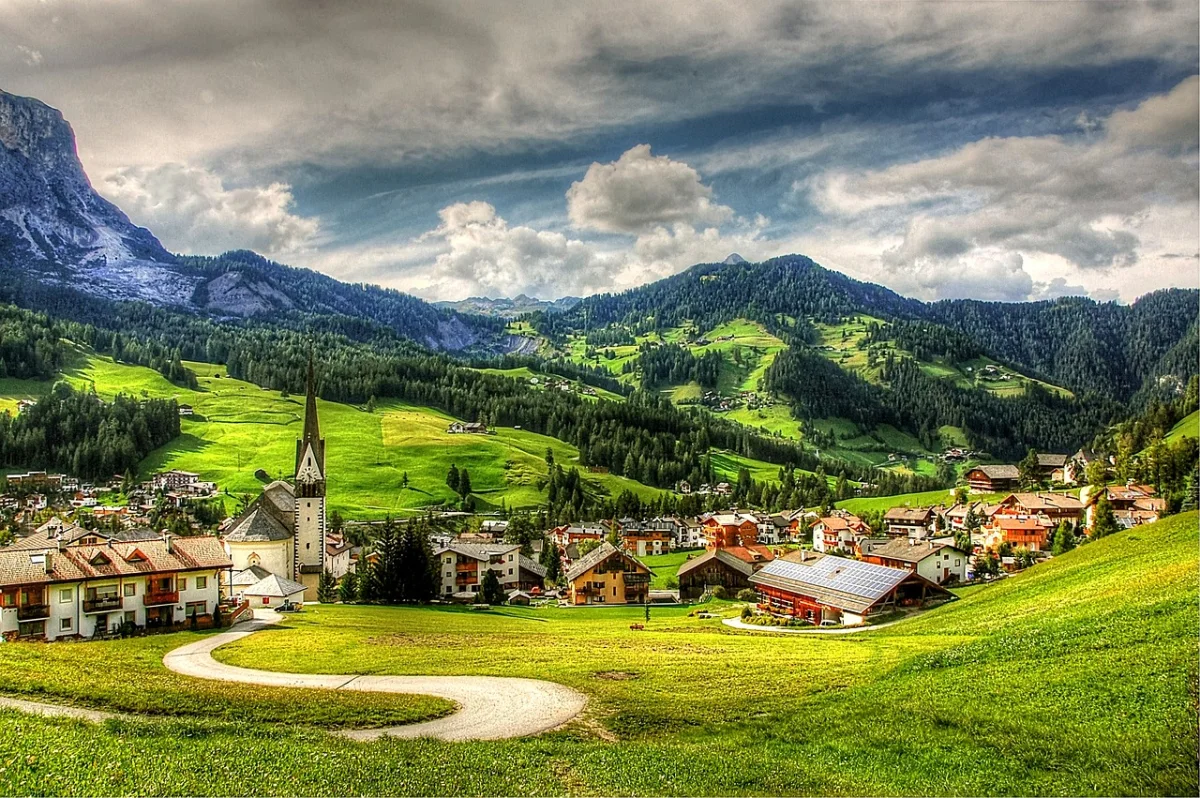
Canazei lies at the upper end of Val di Fassa, surrounded by the Sella massif, Sassolungo and Marmolada. Passo Pordoi and Passo Sella are both nearby, while lifts from Canazei, Alba and Campitello provide access to several distinct hiking zones.
Few bases offer such a wide selection of high-altitude terrain within a relatively small area.
The village works particularly well for active visitors who want a different style of hike each day: a panoramic ridge, a demanding summit, a high plateau, a long valley route or a lift-assisted hut walk. Official regional information presents Canazei as a summer hiking centre with access toward Marmolada, Sella and the surrounding passes.
Official Canazei destination information ↗Best Hikes from Canazei
The Viel del Pan is one of the best-known panoramic routes in the area, with sustained views toward Marmolada.
Passo Pordoi provides access to Sass Pordoi and the high Sella plateau. Experienced hikers can continue toward Piz Boè, although altitude, exposure and conditions should not be underestimated.
Other possibilities include:
- Col Rodella and the Sassolungo area;
- Val Contrin;
- Ciampac and the surrounding ridges;
- hikes above Alba di Canazei;
- routes from Passo Sella;
- trails around Lake Fedaia and Marmolada.
Who Should Stay in Canazei?
Canazei is a strong choice for:
- active hikers who want a large route selection;
- travellers combining hiking with cycling or trail running;
- visitors who prefer apartments and practical resort facilities;
- groups with different ability levels;
- hikers planning to explore Passo Pordoi and Passo Sella.
It can also be a useful compromise for travellers who want access to both Val di Fassa and the central Sella region.
The Main Drawbacks
Canazei feels more like a busy mountain resort than a secluded Alpine village. The main road through Val di Fassa can become congested, particularly when traffic builds around the passes.
Although buses and lifts reduce some driving, having a car remains useful when exploring several parts of the valley.
Canazei is also a poor base for the eastern Dolomites. Tre Cime, Cortina and Lake Braies belong in a separate stage of the trip.
Where to Stay in Val di Fassa
Central Canazei provides the best restaurant and service selection.
Campitello di Fassa is a good alternative near the Col Rodella lift. Alba di Canazei offers convenient access to Ciampac and Col dei Rossi. Pozza di Fassa is more central within the wider valley and may suit visitors who want to explore both northern and southern Val di Fassa.
05 · South TyrolDobbiaco: The Best Dolomites Base Without a Car
Dobbiaco is one of the most practical bases for a hiking holiday using public transport.
The village has a railway station and bus connections toward Tre Cime, Lake Braies, Misurina, Sesto, San Candido and the Val Pusteria region. A dedicated hiking bus also serves trailheads around Dobbiaco.
Official route information identifies numerous hikes as accessible by public transport, including the classic circuit around Tre Cime.
Official Tre Cime public-transport hiking information ↗Best Hikes from Dobbiaco
Dobbiaco is particularly useful for reaching:
- Tre Cime and Rifugio Locatelli;
- Lake Dobbiaco;
- Lake Landro;
- Strudelkopf and Prato Piazza;
- Lake Braies;
- Val Fiscalina near Sesto;
- the Monte Piana open-air museum;
- routes around San Candido and the 3 Zinnen region.
Some outings begin near the village, while others require a bus or train connection. The transport network means you can complete point-to-point hikes without returning to a parked car.
Who Should Stay in Dobbiaco?
Choose Dobbiaco when you:
- are travelling through the Alps by train;
- do not want to rent a car;
- plan to hike around Tre Cime and the northern Dolomites;
- enjoy lakes, forests and moderate mountain routes;
- want a practical village rather than a glamorous resort.
Dobbiaco is also well suited to mixed hiking and cycling holidays because of the valley’s rail and cycle-path infrastructure.
The Main Drawbacks
Dobbiaco is an excellent transport base, but the most dramatic mountain scenery does not begin directly outside every hotel. Many of the headline hikes still require a bus journey.
The village atmosphere is also quieter and more functional than Cortina or Ortisei. Travellers prioritising boutique hotels, nightlife and a large restaurant selection may prefer one of the better-known resorts.
Dobbiaco or Sesto?
Stay in Dobbiaco for the strongest transport connections and easier access to Lake Braies, Tre Cime and the wider Val Pusteria area.
Stay in Sesto when Val Fiscalina, Croda Rossa and the local lift network are your main priorities. Sesto feels closer to the mountains, while Dobbiaco works better as a regional transport hub.
06 · Fodom ValleyArabba: The Best Base for Serious Hikers Seeking Quieter Evenings
Arabba is a compact village at approximately 1,600 metres beneath the Sella massif. Its high starting elevation and summer lifts make it possible to reach serious mountain terrain quickly.
The village is less polished and less crowded than Ortisei, Cortina or Corvara. That is part of its appeal. Arabba is a place for visitors who expect to spend most of the day outside and do not need a long list of shops or evening attractions.
Summer lifts connect the village with terrain above 2,000 metres, while several routes begin directly from Arabba or the surrounding passes.
Official Arabba lift information ↗Best Hikes from Arabba
The Viel del Pan is a major highlight, offering one of the classic views toward Marmolada.
Porta Vescovo provides access to high paths and demanding routes, including areas associated with First World War history. Passo Pordoi, Passo Campolongo and the Sella massif are all close.
Other possibilities include:
- the Padon ridge;
- hikes toward Lake Fedaia;
- routes around Piz Boè;
- Col di Lana;
- Pralongià from the Alta Badia side;
- longer high-level traverses using lifts and buses.
Arabba is also a strong base for via ferrata, although these routes require appropriate experience and equipment.
Who Should Stay in Arabba?
Arabba suits hikers who:
- prefer long mountain days to village sightseeing;
- want quick access to high-altitude terrain;
- are comfortable with steeper and more rugged routes;
- want a quieter base near the Sella massif;
- plan to combine hiking with via ferrata or mountain biking.
It is also useful for travellers arriving by car who want to explore several high passes without staying in a large resort.
The Main Drawbacks
Arabba has fewer restaurants, shops and rainy-day activities than the larger Dolomites bases. Evening life is quiet, and accommodation choice is more limited.
A car is helpful for reaching the broadest selection of trails. Public transport exists, but Arabba is not as simple for car-free travel as Dobbiaco or Ortisei.
Because the village is already high, mornings and evenings can feel noticeably cooler than in lower valleys.
07 · Pale di San MartinoSan Martino di Castrozza: The Best Quieter Alternative
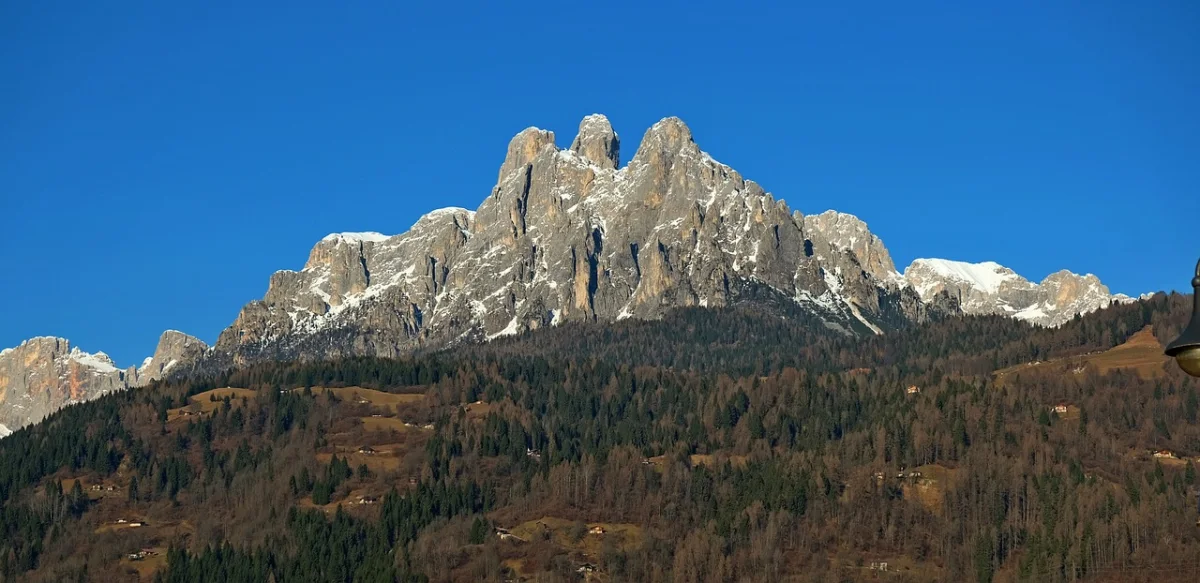
San Martino di Castrozza lies beneath the Pale di San Martino, one of the most dramatic and distinctive mountain groups in the Dolomites.
The village is geographically separate from the most famous central and eastern resorts. This makes it inconvenient for day trips to Ortisei or Tre Cime, but excellent for travellers who want to concentrate on one spectacular region.
Lifts rise from near the village toward Tognola, Colverde and the Pale di San Martino plateau. The Rosetta cable car reaches almost 2,700 metres, opening access to a stark high-altitude landscape and an extensive network of mountain huts and trails.
Official San Martino lift information ↗Best Hikes from San Martino di Castrozza
The Pale plateau is the defining experience. Short walks near the Rosetta lift provide immediate high-mountain scenery, while experienced hikers can continue across the plateau toward remote huts and longer traverses.
Other options include:
- the Colbricon Lakes;
- Val Canali;
- Rifugio Pradidali;
- the Tognola area;
- Passo Rolle and Baita Segantini;
- routes beneath Cimon della Pala;
- multi-day hut-to-hut journeys across the Pale.
The region offers everything from easy lift-assisted walks to demanding mountaineering routes.
Who Should Stay in San Martino?
Choose San Martino when you:
- have already visited the central Dolomites;
- want dramatic scenery with fewer international visitors;
- prefer one concentrated hiking region over daily road trips;
- are interested in hut-to-hut hiking;
- want a genuine mountain village with useful tourist services.
It is one of the strongest choices for a second or third Dolomites trip.
The Main Drawbacks
San Martino is not centrally positioned for the headline attractions elsewhere in the Dolomites. Staying here to visit Seceda, Cortina or Tre Cime would create unnecessarily long driving days.
Public transport is less convenient for international arrivals than the rail-connected villages of South Tyrol. A car makes the region easier to explore, particularly for Val Canali and Passo Rolle.
Where to Stay in the Area
San Martino di Castrozza offers the most convenient access to lifts and village services.
Fiera di Primiero lies lower in the valley and has a more lived-in atmosphere, but requires additional travel to high trailheads. Staying near Passo Rolle places you directly beneath the mountains, although accommodation and evening options are more limited.
Which Dolomites Base Should You Choose?
The best base is the one that matches the hikes you genuinely intend to complete, not the one that appears closest to the centre of the Dolomites.
Choose Ortisei When…
You want the easiest all-round first trip, excellent lift access and several days of hiking without relying heavily on a car.
Choose Cortina When…
Your shortlist includes Tre Cime, Cinque Torri, Lagazuoi, Lake Sorapis and the eastern Dolomites.
Choose Corvara When…
You want a premium, central base for the Sella massif, Alta Badia and the Puez region.
Choose Canazei When…
You want high-altitude variety around Marmolada, Sassolungo, Sella and the mountain passes.
Choose Dobbiaco When…
You are travelling without a car or want the most practical public-transport base for Tre Cime and the northern Dolomites.
Choose Arabba When…
You prefer demanding hikes, quiet evenings and fast access to rugged terrain.
Choose San Martino When…
You want fewer crowds and are happy to dedicate the trip to the Pale di San Martino rather than collecting famous locations across the entire Dolomites.
Is One Base Enough for the Dolomites?
One base is enough for a shorter trip, provided you choose a single region and accept that you will not see everything.
For a four- or five-night holiday, stay in one place. Changing hotels would consume time without creating much additional value.
For a trip of seven to ten nights, two bases usually work best. A strong first-time combination is:
- Ortisei or Corvara for the central Dolomites;
- Cortina or Dobbiaco for the eastern Dolomites.
This arrangement gives access to very different landscapes without turning every day into a long drive.
For a two-week trip, a third base such as Canazei, Arabba or San Martino can add another distinct mountain region.
The Best Base for a Car-Free Dolomites Holiday
Dobbiaco is the strongest overall choice for a trip organised around trains and buses. It has direct rail access and useful connections to several famous hiking areas.
Ortisei is another good option. You must first reach Val Gardena by bus, but once settled in the village, lifts and local transport provide access to many trails.
Corvara can also work without a car when the holiday focuses on Alta Badia. Cortina has buses and summer lifts, but its major trailheads are spread over a larger area, making careful planning more important.
Even in a car-free base, check the last return service before beginning a long hike. Mountain buses may run less frequently in the late afternoon or outside the peak summer period.
When to Book Accommodation in the Dolomites
July and August bring the widest range of operating lifts and mountain huts, but also the highest demand.
Late June can be excellent for green valleys and quieter trails, although snow may remain on high routes. September often provides cooler temperatures and clearer views, but lift and hut closures gradually reduce the available options.
Opening periods vary by location, altitude and year. Many summer lift systems operate from June into September, with selected services continuing into October, but hikers should verify current dates before booking routes that depend on a specific lift.
Official Alta Badia summer lift calendar ↗Book early when travelling during:
- the main July and August holiday period;
- weekends with major cycling or running events;
- the first half of September;
- dates requiring a specific central hotel or apartment.
Travellers with a car can often save money by staying outside the most famous village centre, but the daily cost of parking and extra driving should be considered.
Frequently Asked Questions
What Is the Best Town to Stay in the Dolomites for Hiking?
Ortisei is the best all-round choice for most first-time visitors. It combines direct lift access, varied hikes, good public transport and a lively but manageable village.
Cortina is better when your priorities are Tre Cime, Cinque Torri and the eastern Dolomites.
Is It Better to Stay in Cortina or Val Gardena?
Stay in Cortina for Lake Sorapis, Lagazuoi, Cinque Torri, Tre Cime and the Tofana area.
Stay in Val Gardena for Seceda, Alpe di Siusi, Sassolungo and the Puez–Odle Nature Park.
Neither is objectively better. They serve different parts of the Dolomites and work particularly well as a two-base combination.
Can You Explore the Dolomites from One Hotel?
Yes, but only when you focus on the surrounding region.
Attempting to visit Seceda, Tre Cime, Lake Braies, Marmolada and San Martino from one hotel creates too much driving. Divide a longer holiday between two or three bases instead.
Where Should You Stay for Tre Cime?
Dobbiaco is the most practical general base because of its transport links and access to the northern Dolomites.
Misurina places you closer to Tre Cime and the Cadini group but offers fewer village services. Cortina is better when Tre Cime is only one part of a broader eastern Dolomites itinerary.
Where Should You Stay in the Dolomites Without a Car?
Dobbiaco is the strongest choice because it has a railway station, regional buses and dedicated hiking transport.
Ortisei is best for travellers who want to remain in one valley and use lifts for most hiking days.
Which Dolomites Base Is the Quietest?
Arabba and San Martino di Castrozza are generally calmer than Ortisei or Cortina.
For even quieter accommodation, consider smaller villages outside the main centres, but confirm that buses, restaurants and lifts will still be practical for your plans.
What Is the Best Base for Easy Hikes?
Ortisei provides the best overall selection of easy lift-assisted walks, particularly around Alpe di Siusi, Resciesa and the Seceda meadows.
Corvara is another strong option for gentle plateau and hut walks in Alta Badia.
Final Thoughts
There is no single perfect place to stay in the Dolomites because the region is not one compact destination.
Ortisei is the strongest all-round base for a first visit. Cortina provides access to the greatest concentration of famous eastern Dolomites hikes. Corvara and Canazei work particularly well around the Sella massif, while Dobbiaco is the clear choice for public transport.
Arabba rewards hikers who prefer serious mountain days and quiet evenings. San Martino di Castrozza offers a more focused and less obvious alternative beneath the extraordinary Pale di San Martino.
Choose the hikes first and the hotel second. Once the daily driving is reduced, there is more time for early starts, longer lunches at mountain huts and the flexibility to change plans when the weather moves across the peaks.