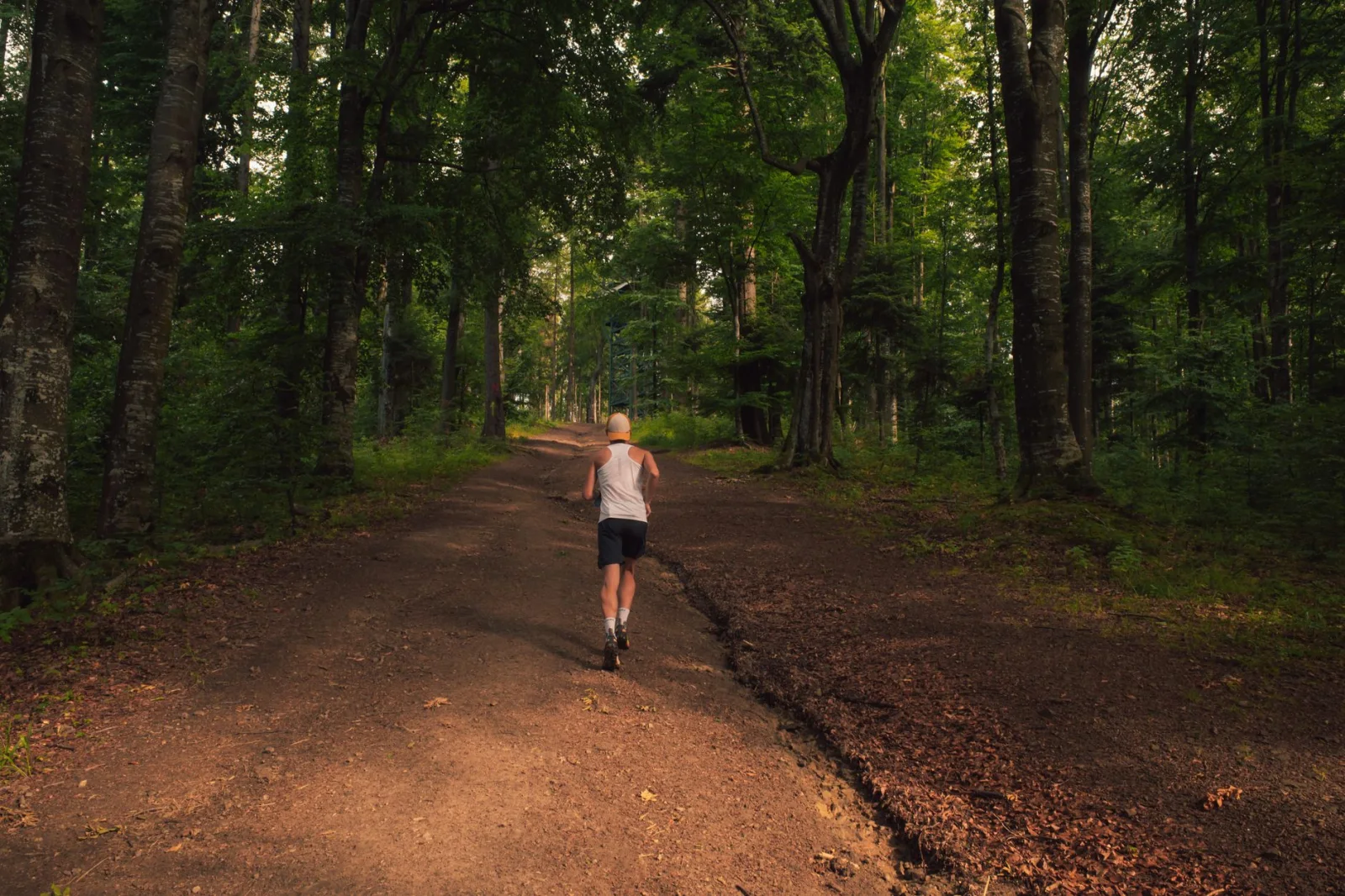
Road running makes useful promises. The surface is predictable, a kilometre usually means what it did yesterday and the quickest way home is rarely difficult to find.
A trail removes those promises one by one. A short hill interrupts the pace. Roots change the stride. Rain turns an ordinary corner into a place that deserves attention. Five kilometres may take longer than expected, yet feel less repetitive than three on the road.
That difference is what draws people off the pavement. It is also why the first trail run should be deliberately modest. The goal is not to prove that road fitness transfers perfectly to uneven ground. It is to finish with enough energy to notice what the trail taught you.
This guide is for two kinds of beginner: someone who is new to running altogether, and someone who can already run comfortably on the road but has little experience on natural terrain. Both can begin in the same place: a short, familiar route and an effort that feels almost too easy.

“The first trail run should finish with curiosity, not proof.”
Your First Trail Run at a Glance
| Decision | Conservative first choice | Why it works |
|---|---|---|
| Surface | Wide forest track, gravel path or smooth park trail | Introduces uneven ground without demanding technical footwork |
| Time | 30–45 minutes, including walking | Time is easier to control than distance on variable terrain |
| Climbing | About 50–150 m of ascent | Enough to change the rhythm without making the hill the entire run |
| Effort | Fully conversational | Trail pace varies too much to be a useful first target |
| Hills | Walk the steeper sections | Power hiking is normal, efficient and easier to recover from |
| Navigation | Marked loop with an obvious shortcut | A simple exit keeps a small problem from becoming a long one |
| Shoes | Road shoes on dry smooth tracks; trail shoes for mud, rock or steep ground | Match grip and protection to the surface rather than the label |
| Carry | Phone, route, light layer and water when conditions require it | Enough for a delay without turning the run into an expedition |
01 · Definition · Natural terrainWhat Trail Running Actually Is
Trail running does not begin only above the tree line. World Athletics describes the discipline as running on natural terrain that may include dirt, sand, forest paths, single track, plains, deserts and snow trails. For an ordinary runner, the useful definition is even simpler: the route is mostly unpaved, and the surface changes how you move. World Athletics trail-running definition ↗
A canal towpath, a woodland loop and a gentle coastal track can all be legitimate introductions. You do not need a mountain, a race vest or a watch displaying vertical speed. Starting close to home is usually better because the terrain is new even when the landscape is not.
The sport becomes more demanding when three things increase: distance, elevation and technicality. Beginners often change all three at once. A safer progression changes one, then waits for the body and confidence to catch up.
02 · Starting point · Beginner levelNew to Running and New to Trails Are Different Problems
Someone who has never run regularly needs to adapt to running before adding much climbing or difficult terrain. The NHS Couch to 5K plan uses three sessions a week, alternates running with walking and places rest days between sessions. That gradual structure is more valuable than the exact nine-week timetable. NHS Couch to 5K running plan ↗
An absolute beginner can complete the early walk-run sessions on a flat gravel path or firm park trail. Keep the route close to people, roads and an easy exit. There is no benefit in learning continuous running, navigation and steep descending on the same afternoon.
A road runner who already completes an easy 5K can begin differently: replace one easy road run each week with a short trail outing. Do not add a trail run on top of the existing schedule at first. The heart may be ready for more work before the ankles, calves and stabilising muscles are ready for uneven ground.
03 · First route · Keep it smallChoose a First Route That Can Be Shortened
The best beginner route is not the most scenic line on the map. It is the one that gives several opportunities to make a good decision. A loop around a forest park, lake or low ridge is ideal when a side path returns quickly to the start.
Look for a wide path, modest gradients, reliable signs and a surface that remains runnable after ordinary weather. Avoid exposed ridges, remote valleys, river crossings and routes described with words such as scrambling, hands-on, pathless or severe. These may be good future goals, but they teach too many lessons at once.
Walk the route first when uncertain. England Athletics specifically recommends using a map and even walking a local path before running it. Familiarity removes navigation pressure and lets the first run focus on movement rather than constant phone checking. England Athletics beginner trail-running guidance ↗
A useful first route often looks unimpressive on a hiking website: three to six kilometres, one or two small hills and no famous summit. That is precisely why it works.
04 · Effort · Not paceStop Comparing Trail Pace With Road Pace
Trail pace is information without context. A smooth forest road and a wet root-filled descent can produce completely different times at the same effort. Elevation, mud, heat, altitude and the need to slow for other users change the number again.
For the first weeks, use the conversation test. England Athletics describes an easy effort as one where a full conversation remains possible. If speech becomes fragmented on a gentle section, slow down. The run is no longer easy merely because the watch labels it that way. England Athletics guide to training pace ↗
Time is a better planning tool than distance. A 40-minute outing remains a 40-minute outing even when the route takes longer than expected per kilometre. Turn around before the halfway point when the return contains more climbing, poorer ground or fading light.
Do not chase a personal best on the first familiar loop. Repeating the same route comfortably is how roots, corners and slopes stop feeling like interruptions and start becoming part of the rhythm.
05 · Hills · Walking is normalWalking Uphill Is Part of Trail Running
Road runners often treat walking as evidence that a run has failed. Trail running does not share that rule. Experienced runners walk steep climbs because running may cost far more energy for very little additional speed.
Walk before breathing becomes ragged, not after. Use short steps, keep the torso tall and place the whole foot where the ground allows. On a longer climb, a strong purposeful walk can preserve enough energy to run the easier ground that follows.
England Athletics advises new trail runners to remove the pressure of road pace and notes that walking the hills is normal. The practical goal is not to run every metre. It is to move through the route at an effort you can repeat next week.
A first hill session can be simple: choose a gentle slope that takes two to four minutes to climb, run easily until the effort rises, then walk. Descend carefully, recover and repeat only if the legs still feel controlled.
06 · Descending · Practise controlLearn the Downhill Before Trying to Run It Fast
Uphill running feels difficult immediately. Downhill running can feel easy until the surface becomes loose, the quadriceps begin to tire or the feet can no longer place themselves precisely.
Start on a gentle descent with good visibility. Shorten the stride, keep the feet landing beneath rather than far ahead of the body and allow the arms to balance. Look several steps along the line, while still checking the immediate ground. Speed should arrive from smoother movement, not from leaning into a slope that exceeds your control.
World Athletics trail-running advice highlights downhill confidence as a skill that beginners often neglect. Practise when fresh, not at the end of the longest run. Walk rocky steps and wet roots until the route is understood. World Athletics downhill trail-running advice ↗
The cautious runner often reaches the bottom sooner than the brave runner who repeatedly brakes, slips or stops. Good descending is quiet, adjustable and never dependent on luck.
07 · Shoes · Match the groundDo You Need Trail-Running Shoes Immediately?
Not always. A dry gravel path or firm woodland track can be suitable for ordinary road-running shoes, especially for a short first outing. Buying new shoes does not make a route safer if the fit is wrong or the terrain is beyond the runner’s skill.
Trail shoes become useful when the route is muddy, steep, rocky or covered with roots. England Athletics points to three main differences: more aggressive grip, protective features such as toe guards or rock plates, and tougher uppers. The amount of grip should match the surface; deep lugs designed for mud can feel awkward on long paved sections. England Athletics trail-running shoe guidance ↗
Fit matters more than category. The heel should remain secure, the toes need space to spread and swell, and the front of the foot must not hit the shoe on a descent. Try shoes with the socks used for running, preferably later in the day when feet are slightly larger.
Waterproof membranes solve a specific problem: cold, wet ground. They can feel hot in summer and cannot stop water entering over the collar. For warm routes with stream crossings, a breathable shoe that drains and dries may be more useful.
08 · Equipment · Carry for delayWhat to Carry on a Beginner Trail Run
A short local trail run does not automatically require a hydration vest. It does require enough equipment for the consequences of being slower, taking a wrong junction or stopping with a minor injury.
- A charged phone with the route saved for offline use.
- A small windproof or waterproof layer when conditions are changeable.
- Water according to heat, duration and access along the route; do not assume streams are safe to drink.
- A small snack for longer outings or when the route may take more time than planned.
- Identification, any essential medication and a way to pay for an unexpected bus or café stop.
- A light or headtorch when the route could approach dusk, even if the planned finish is earlier.
Remote or mountain routes justify more: a whistle, basic first-aid items, spare warmth, an emergency blanket and a physical backup map. Mountain Rescue England and Wales warns that even in summer, suitable clothing and spare layers matter. A runner who stops after an injury cools far more quickly than one who is moving. Mountain Rescue outdoor safety guidance ↗
Tell someone the route and expected return time when leaving busy parks and moving into quieter terrain. A live location link is useful, but not a substitute for a clear plan when reception disappears.
09 · Progression · Change one thingA Six-Week Road-to-Trail Transition
This is not a race-training plan. It is a conservative way for someone who already runs comfortably for about 30 minutes to become familiar with trail surfaces. Keep other weekly running easy and repeat a week when the terrain leaves unusual soreness or fatigue.
- Week 1. 30 minutes on smooth gravel or a firm park path. Only the surface changes; keep the route flat and conversational.
- Week 2. 30–35 minutes on a familiar rolling trail. Walk each meaningful hill before the effort becomes hard.
- Week 3. 35–40 minutes with one gentle descent practised twice. Add downhill skill, not additional distance.
- Week 4. Repeat the week-three route or a similar loop. Build familiarity instead of searching for a harder route.
- Week 5. 45–50 minutes with a clear shortcut and modest climbing. Extend time while keeping technicality low.
- Week 6. 50–60 minutes or an easy local 5–8 km trail event. Choose completion and enjoyment rather than a target time.
Absolute beginners should first use a structured run-walk programme on safe, easy ground. The NHS plan allows the process to take longer than nine weeks, which is a useful principle: adaptation is not late simply because a calendar says it should have happened already.
10 · Strength · Control firstThe Small Strength Routine That Makes Trails Easier
Uneven terrain asks the body to stabilise each landing. A runner does not need a complicated gym programme, but a small amount of consistent strength and balance work can make the trail feel less chaotic.
- Single-leg balance for 30–45 seconds per side, progressing from firm floor to a folded towel.
- Slow calf raises, first with both legs and later one leg at a time.
- Split squats or step-ups with controlled lowering.
- Side steps with a resistance band or unweighted lateral lunges.
- A short core hold such as a side plank, performed with good form rather than long duration.
Two brief sessions a week are enough to begin. Do not place unfamiliar heavy strength work immediately before the trail run. The purpose is to create control, not to arrive at the path with fatigued legs.
11 · Weather · Read the trailRead the Forecast for the Trail, Not the Town
A forecast for the nearest city may not describe a ridge, forest or exposed slope. The Met Office notes that hill conditions can change quickly and differ sharply from the valleys, with stronger wind, lower temperature, cloud and poor visibility. Met Office mountain safety guidance ↗
For a first trail run, bad weather is not an opportunity to test character. Move the run to a sheltered lower route, shorten it or return to the road. Wet roots, polished rock and fallen leaves can change the technical level without changing the map.
Heat creates a different problem. Shade on the map may not exist after forestry work or on open moorland. Begin earlier, reduce the route and carry sufficient water. Good summer weather can make people underestimate how far they have moved from an easy exit.
Turn back when the route is becoming harder faster than expected. The decision is not wasted training; it is the outdoor skill that allows more training to happen later.
12 · Etiquette · Share the trailTrail Etiquette Is Part of Running Well
A runner moves quietly and can surprise walkers, riders, dogs and wildlife. Slow down before passing, communicate early and wait for a place where everyone can remain stable. Uphill users generally receive priority because restarting on a climb is harder.
Leave No Trace advises runners to stay on the established trail, including through muddy sections, because running around puddles widens the path and damages vegetation. Do not cut switchbacks. Carry wrappers in a secure pocket and leave gates as local signs require. Leave No Trace guidance for trail runners ↗
Music should never remove awareness of other users or approaching weather. One ear free, low volume or no headphones at all is a better choice on narrow, shared or remote paths.
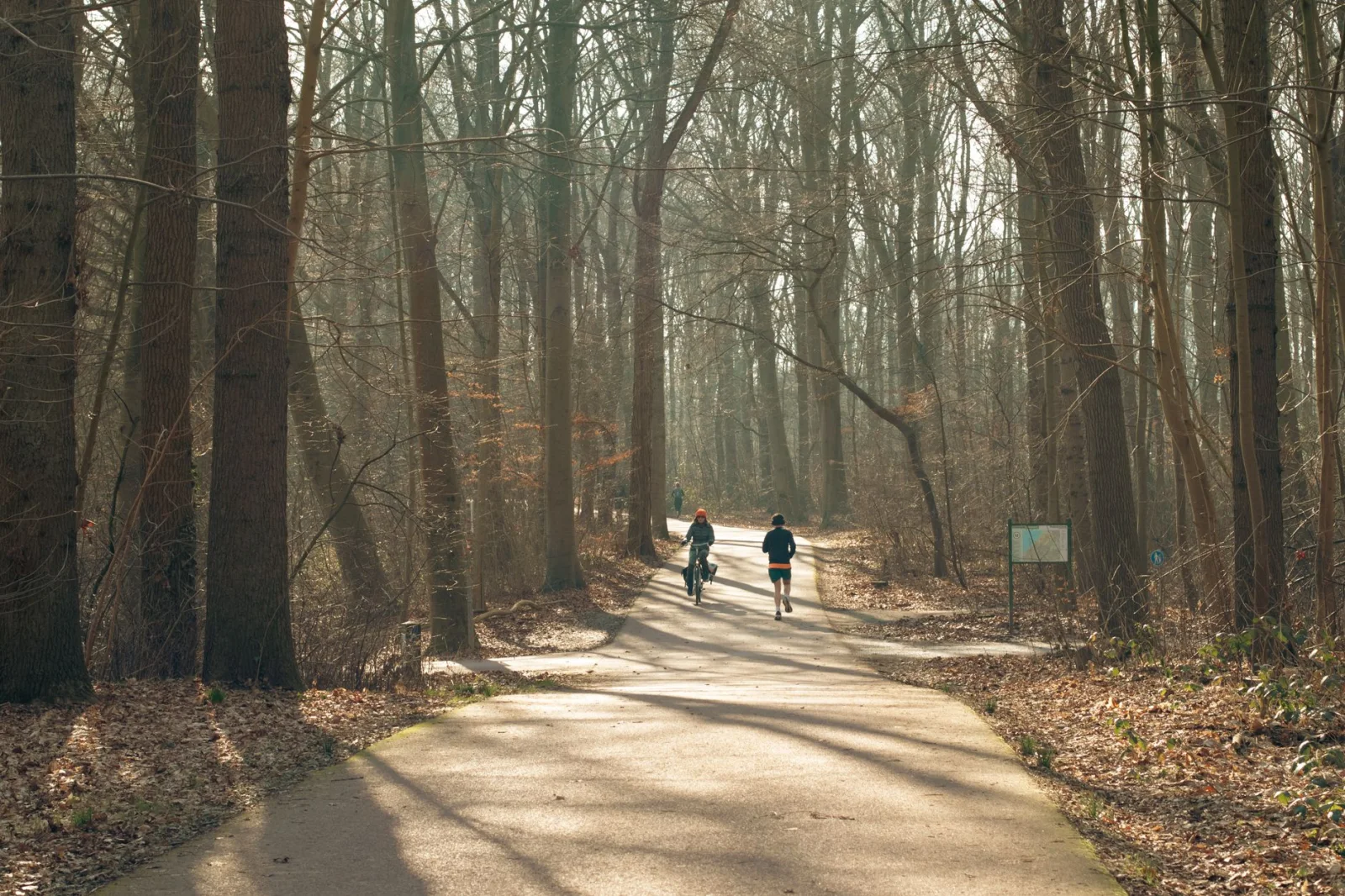
The best trail-running style is not the one that occupies the most space. It is the one that can pass through a landscape without making everyone else adapt to it.
13 · First event · Keep it smallWhen to Enter Your First Trail Race
A race can provide signs, aid, a fixed date and a supportive reason to train. It can also encourage a beginner to choose distance by ambition rather than current experience.
Look for five to ten kilometres on terrain similar to local training, with a generous time limit and clear information about climbing. Read the course description rather than assuming that “5K” means the same effort as a flat park run.
England Athletics recommends making enjoyment, rather than a finish time, the goal of a first trail event. Start behind the fastest runners, walk early hills and keep enough attention for the final descent. A first race succeeds when it makes the next ordinary run more appealing.
14 · Common mistakes · Avoid overcorrectionSeven Beginner Mistakes
- Choosing a famous mountain route when a local forest would teach the same first lessons more safely.
- Trying to preserve road pace on climbs and uneven ground.
- Increasing distance, elevation and technicality in the same week.
- Running every hill until walking becomes an exhausted last resort.
- Descending quickly before learning where the feet should land.
- Buying a vest full of equipment while forgetting the offline route and weather check.
- Treating mud, darkness or worsening pain as proof that the run must continue.
Most of these errors come from trying to make the first run look like trail running rather than allowing it to become trail running gradually.
Frequently Asked Questions
Can I start trail running if I cannot run 5K?
Yes. Use a run-walk plan on a flat, marked trail close to an easy exit. Building continuous running and learning technical terrain do not need to happen at the same time.
How long should my first trail run be?
About 30–45 minutes including walking is enough for many beginners. Choose time rather than distance, because hills and surface conditions can make the same distance take much longer.
Is walking uphill allowed in trail running?
Yes. Walking steep climbs is normal at every level of the sport. Begin walking while the effort is controlled rather than waiting until you are exhausted.
Can I use road-running shoes?
On a dry, smooth gravel or woodland route, often yes. Trail shoes become more useful when mud, loose rock, steep slopes or roots require additional grip and protection.
Do I need a hydration vest?
Not for every short local run. Carry water when heat, duration and lack of reliable supplies make it necessary. A belt, handheld bottle or small pack may be enough before a vest becomes useful.
Why am I so much slower on trails?
Because the trail changes the task. Climbing, cautious descending, soft ground and navigation all reduce speed. Compare effort and route familiarity rather than road pace.
Should I run alone?
A busy local loop can be a reasonable solo introduction. For quieter routes, tell someone the plan and return time, carry navigation and choose terrain within your skills. A club or guided beginner group can remove much of the uncertainty.
What should make me turn back?
Worsening weather, fading light, navigation uncertainty, an unexpectedly swollen river, sharp pain or a route that is becoming more technical than described. Turning back is part of route management, not a failed workout.
Final Thoughts
Trail running is often advertised through its extremes: high summits, long races and runners disappearing into difficult weather. None of those are required for the first step away from the road.
Begin with a route that looks almost too easy. Run slowly enough to watch the ground. Walk before the climb demands it. Practise a short descent while the legs are fresh, and return with enough energy to understand what felt different.
The road teaches repetition. The trail teaches adjustment. Learning that adjustment without rushing it is not a cautious version of trail running. It is the skill on which every longer run depends.