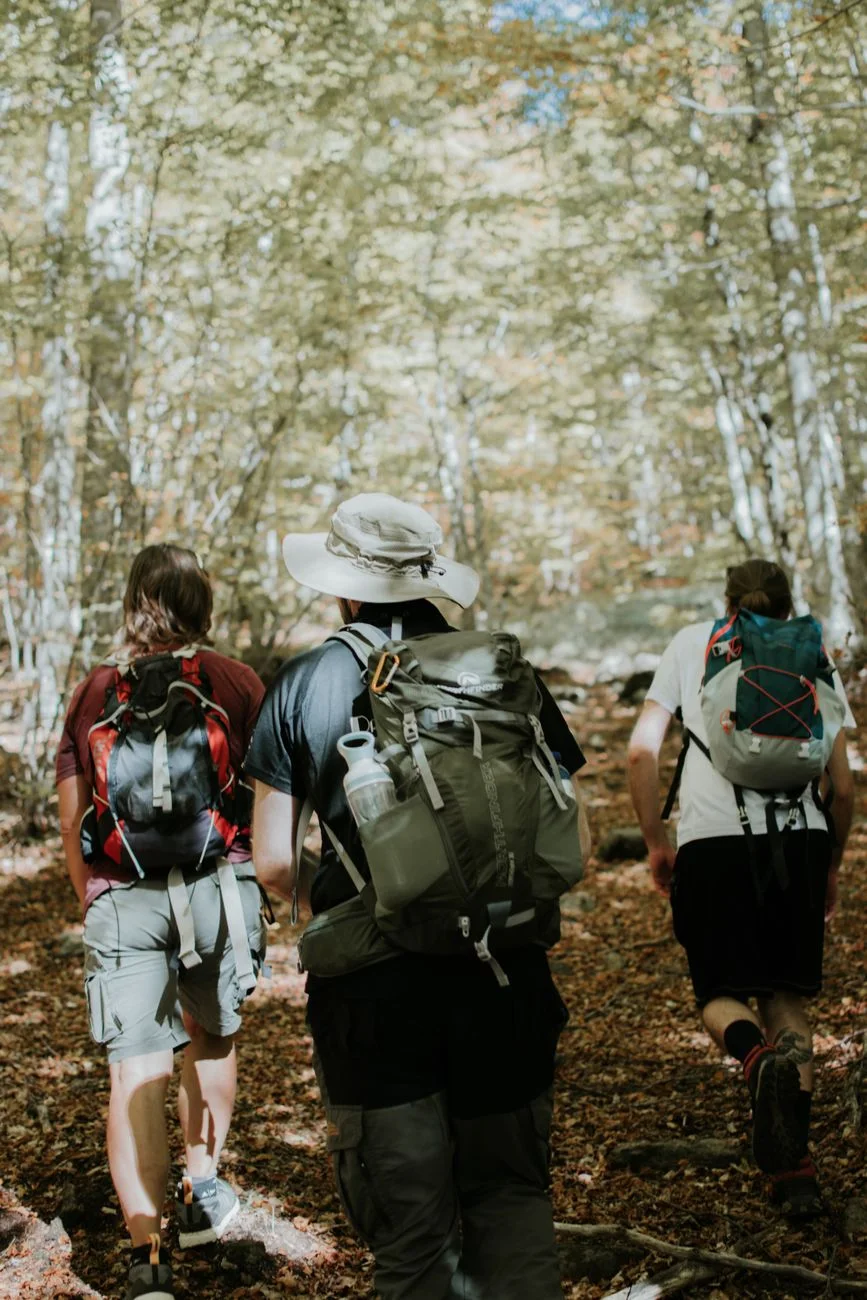
The outdoor industry is very good at turning a walk into a shopping problem. A beginner opens a gear guide and is quickly presented with waterproof membranes, specialist midlayers, trail-specific watches, carbon poles, satellite communicators and backpacks designed for journeys far longer than the one actually planned.
Most people do not need all of that to begin hiking. They need footwear that fits, a modest backpack, clothing that can handle a change in weather, enough water and food, a way to navigate and a small emergency system. The expensive parts can wait until experience reveals a real problem to solve.
The first useful lesson in hiking gear is that almost everything is conditional. A two-hour woodland walk near a town is not the same outing as a full day above the tree line. A well-marked lakeside path in stable weather does not require the same margin as a remote ridge with few escape routes. Good packing begins with the route, not with a universal list copied from someone else.
This guide separates what a beginner should buy first from what is optional, over-specified or better borrowed. It is written for ordinary day hiking in Europe, with additional notes for longer, higher and more remote days.

The goal is not to own outdoor gear. It is to carry a small system that still works when the easy plan changes.
HIKING GEAR · BEGINNERSThe Beginner's Gear Checklist
| Category | Buy or carry first | Wait, borrow or skip |
|---|---|---|
| Footwear | Comfortable shoes or boots with reliable grip | Heavy leather boots just because they look serious |
| Backpack | A simple 15-25 litre day pack for most easy outings | A 40-50 litre pack for short day hikes |
| Clothing | Comfortable layers, a warm layer and weather protection | A complete technical wardrobe before your first walk |
| Navigation | Offline map, route details and a backup method | A dedicated GPS device for every local trail |
| Water and food | Enough for the route, plus a modest reserve | A cooking system for an ordinary day hike |
| Light | A small headlamp, even on longer daytime routes | A large camping lantern |
| First aid | A compact kit matched to the group and route | A heavy expedition medical bag |
| Emergency | Whistle, charged phone and lightweight shelter | Specialist rescue hardware you cannot use |
| Optional | Poles, gaiters or a power bank when the route justifies them | Buying every accessory before knowing your preferences |
01 · FOUNDATIONStart With the Route, Not the Shopping List
Before thinking about products, answer a few ordinary questions. How long will the walk take with breaks? What is the highest and most exposed point? Is the route easy to shorten? Will there be phone coverage, water, shelter or public transport nearby? What happens if someone turns an ankle and the group moves at half speed?
These questions change the packing list more than brand names do. A beginner often makes one of two mistakes: carrying a heavy bag filled with items that do not fit the route, or treating a familiar-looking trail as if nothing could delay the return.
The National Park Service describes the Ten Essentials as systems rather than a fixed collection of products: navigation, sun protection, extra clothing, light, first aid, fire, repair tools, food, water and emergency shelter. That is a useful way to think. The exact object can change, but the function should be covered when the route and consequences justify it.
National Park Service: The Ten Essentials ↗Ask Before Packing
- How long is the route, including stops and a realistic delay?
- What weather is forecast at the highest point, not only at the nearest town?
- How quickly can you reach a road, shelter or lower ground?
- Does the group include children, beginners or anyone with medical needs?
- Would darkness, cold or rain turn a small delay into a serious problem?
02 · FOOTWEARGrip and Fit Matter More Than the Label

Beginners are often told that hiking begins with boots. Sometimes it does. Often it begins with a comfortable pair of trail shoes, approach shoes or light hiking shoes that fit the terrain and do not create blisters after an hour.
Mountaineering Scotland lists walking boots or approach shoes and hiking trainers as valid summer choices, provided the soles grip rock, grass and mud. That is the practical test. The shoe should hold the heel, leave enough room for the toes on descents and feel secure on the surfaces you expect to meet.
Mountaineering Scotland: Essential Kit ↗Trail Shoes or Boots?
Trail shoes are usually lighter, more flexible and comfortable in warm weather. They work well on established paths, forest tracks and many dry mountain trails. Boots add ankle coverage, warmth and often a stiffer sole. They can be useful in rough terrain, cold conditions, mud, wet vegetation or when carrying a heavier load.
Neither category guarantees ankle protection. A badly fitting boot can be less stable than a well-fitting shoe, and a waterproof membrane can keep shallow rain out while also making a shoe warmer and slower to dry. Fit, grip and the intended route remain more important than the marketing category.
What You Need
- A secure heel and enough toe room for descents.
- A sole that grips the surfaces you actually walk on.
- Socks that fit without folding or creating pressure points.
- Time to wear the footwear before a long or important hike.
What You Don't Need
- Heavy mountaineering boots for easy valley and forest walks.
- A waterproof membrane for every warm, dry route.
- Two or three pairs before you know whether you prefer a shoe or a boot.
- Expensive insoles unless fit, comfort or professional advice gives you a reason.
03 · BACKPACKA Small Day Pack Is Usually Enough
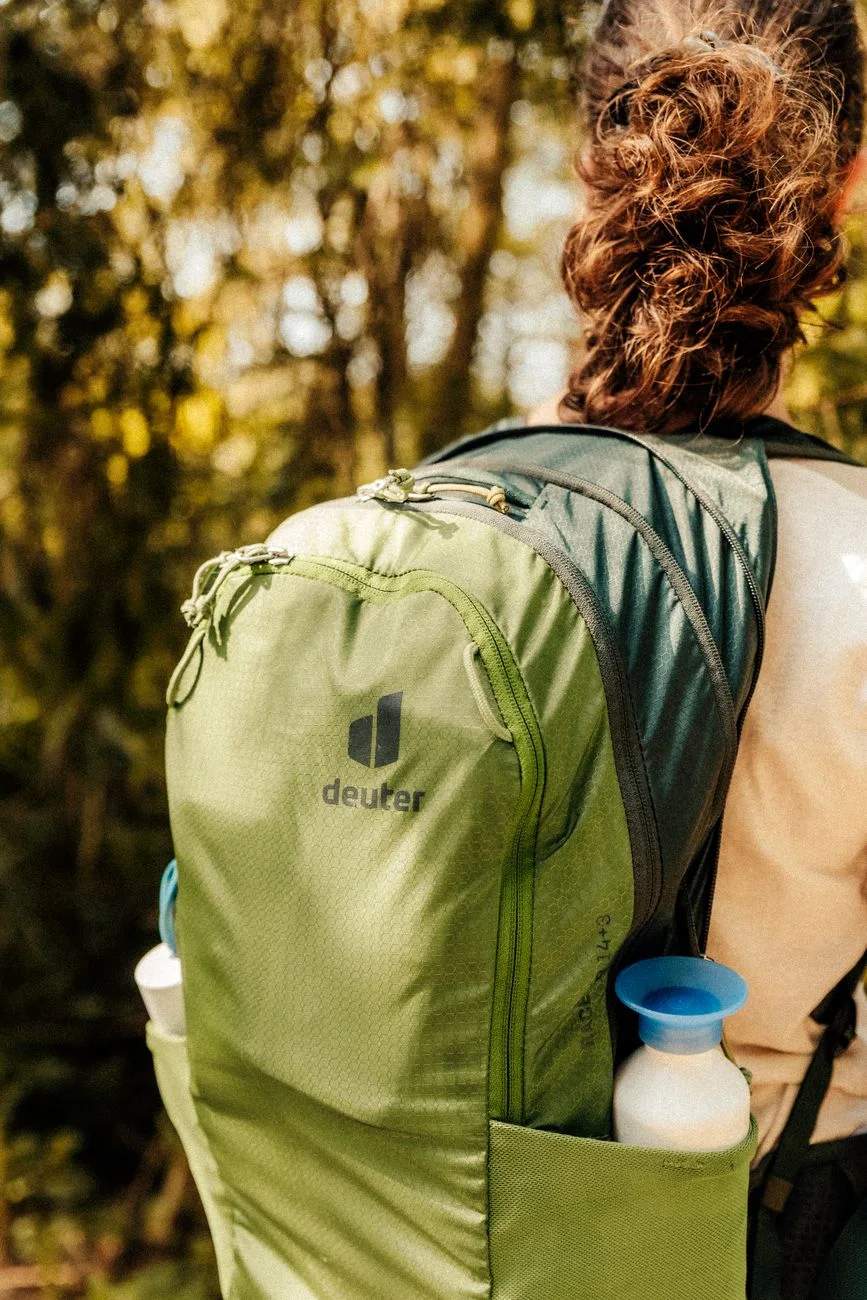
A day-hiking backpack has a simple job: carry water, food, layers and emergency items without moving excessively or making basic equipment difficult to reach. For easy and moderate day hikes, many beginners will be comfortable with roughly 15 to 25 litres. Higher, colder or longer days may justify 25 to 35 litres, especially when carrying equipment for children or a group.
The number on the label matters less than the way the pack carries the real load. Shoulder straps should sit without cutting into the neck. A light hip belt can improve stability. Side pockets make water accessible, while one small outer pocket keeps gloves, snacks and navigation tools from disappearing beneath everything else.
Rain covers are useful but imperfect. Water can still enter through the back panel, seams or shoulder straps. Put insulation, electronics and first-aid supplies in dry bags or simple waterproof liners.
Useful Features
- Two accessible bottle pockets or space for a hydration bladder.
- A light hip belt or stabilising strap.
- One quick-access pocket for small essentials.
- Compression straps if the bag is often partly empty.
- A simple internal liner or dry-bag system.
What You Don't Need
- A large trekking pack for a sandwich, jacket and water bottle.
- A complicated suspension system for a light day load.
- A dozen pockets that make small items harder to find.
- A new pack if an existing school or travel backpack already carries comfortably and securely.
04 · CLOTHINGBuild Layers, Not an Outdoor Uniform
Technical clothing is useful because it manages moisture, wind and changing temperature. It is not useful because every item matches. A beginner can build an effective system from a few pieces already in the wardrobe, then replace the parts that repeatedly fail.
A simple system has three roles: a comfortable layer next to the skin, insulation for stops or colder air, and protection from wind and rain. In mild conditions, that might mean a synthetic T-shirt, a fleece and a waterproof shell. In colder weather, it may include a long-sleeve base layer, gloves, a warm hat and a synthetic insulated jacket.
Cotton becomes uncomfortable when it is wet and can stay wet for a long time, which is why mountain organisations commonly advise synthetic or merino layers for exposed days. That does not mean a cotton T-shirt is forbidden on a short summer walk near town. It means the consequences of getting wet should guide the choice.
Buy First
- One comfortable synthetic or merino top for longer or exposed walks.
- One warm layer that fits beneath the shell.
- Comfortable trousers or shorts that allow a full stride.
- A hat and gloves for mountain days where temperatures can change quickly.
Wait or Skip
- A full set of matching technical clothing.
- Several nearly identical fleeces and base layers.
- Expedition insulation for ordinary summer day hikes.
- Special hiking trousers if existing athletic trousers are comfortable, durable and weather-appropriate.
05 · WEATHER PROTECTIONOne Reliable Shell Is More Useful Than Five Clever Layers
For beginners moving beyond short fair-weather walks, a waterproof jacket with a usable hood is one of the most valuable purchases. It should fit over the warm layer, allow movement and be simple enough to put on before rain becomes heavy.
Waterproof trousers are more conditional. They are important in prolonged rain, cold wind, wet vegetation and exposed mountain weather. They are less urgent for a short low-level walk with a stable forecast and quick escape options. Lightweight over-trousers are often adequate for a first pair.
Sun protection belongs in the same system. Sunglasses, a cap or sunhat, sunscreen and clothing coverage matter even when the air feels cool, particularly at altitude and on reflective terrain.
What to Look for in a First Shell
- A hood that moves with the head and does not block vision.
- Enough room for a fleece or light insulated layer.
- Cuffs and a hem that can be adjusted in wind.
- A length that protects the lower back beneath a backpack.
- A design you will actually carry rather than leave at home because it is too heavy.
You do not need the most expensive membrane available. The first priority is a jacket that fits, stays in the pack and suits the conditions you encounter. Breathability differences matter more after you have enough experience to recognise them.
06 · NAVIGATIONA Phone Is Useful; a Plan Is Essential
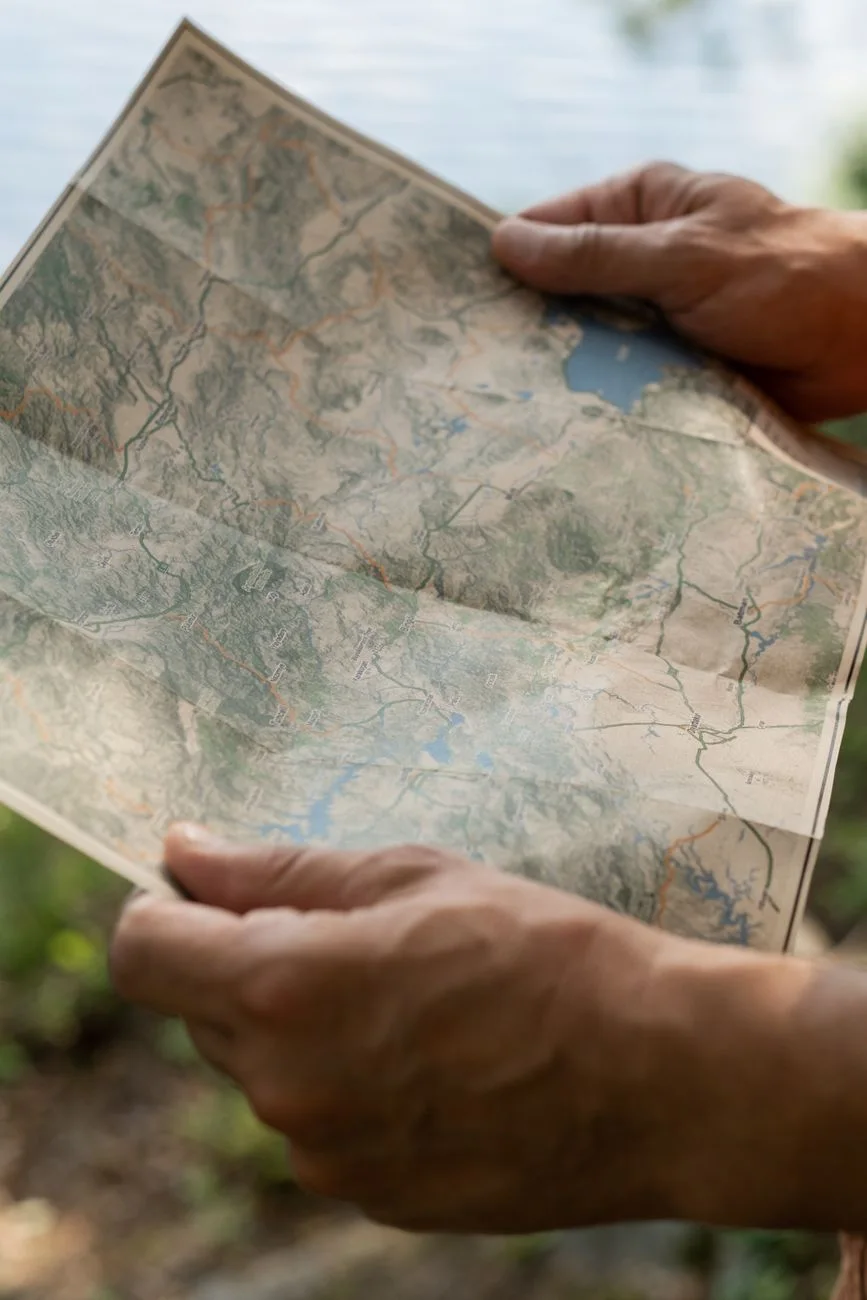
A smartphone with an offline map is one of the best navigation tools available to a beginner. It shows position, stores route information and can make complicated junctions easier to understand. It is still a battery-powered device with a breakable screen, and it is only as useful as the map and route information downloaded before leaving coverage.
For well-marked local walks, a fully charged phone, offline map and written route summary may be a reasonable system. For remote, long or complex mountain routes, add a physical map and the skill to use it. A compass is not a talisman: it becomes useful when the person carrying it understands bearings, contour lines and relocation.
The National Park Service recommends knowing how to use topographic maps, a compass or GPS, carrying a physical map as backup and bringing additional battery power when relying on a phone.
National Park Service: Navigation within the Ten Essentials ↗Basic Navigation System
- Download the route and map before leaving Wi-Fi or mobile coverage.
- Save the start point, expected turning points and escape routes.
- Carry a charging cable and, for longer days, a small power bank.
- Keep the phone warm and dry in cold or wet weather.
- Tell someone the route and expected return time.
What You Don't Need
- A dedicated GPS unit for every local marked path.
- Several mapping subscriptions before learning one application well.
- A compass carried only for appearance, without basic navigation practice.
07 · WATER AND FOODCarry Enough, Not a Mobile Kitchen
Water needs vary with temperature, effort, body size, altitude, route length and access to reliable sources. Fixed internet formulas can create false confidence. The useful approach is to estimate the day conservatively, check whether water is actually available and carry a reserve appropriate to the consequences of running out.
For food, choose items that are easy to eat without preparation and that still appeal after several hours of movement: sandwiches, fruit, nuts, bars, cheese or other familiar foods. A small reserve matters more than a carefully engineered sports product.
Water filters and treatment tablets are valuable on routes where natural water must be used. They are unnecessary weight on a short walk with enough water carried from the start. A stove is similarly useful for specific trips, not a standard day-hiking requirement.
Simple System
- Carry water in bottles or a bladder you can monitor and refill easily.
- Bring familiar food plus a modest extra snack.
- Know whether fountains, huts and streams are seasonal or unreliable.
- Avoid treating clear-looking natural water as automatically safe.
08 · LIGHT AND EMERGENCY GEARThe Small Items That Matter When the Day Changes
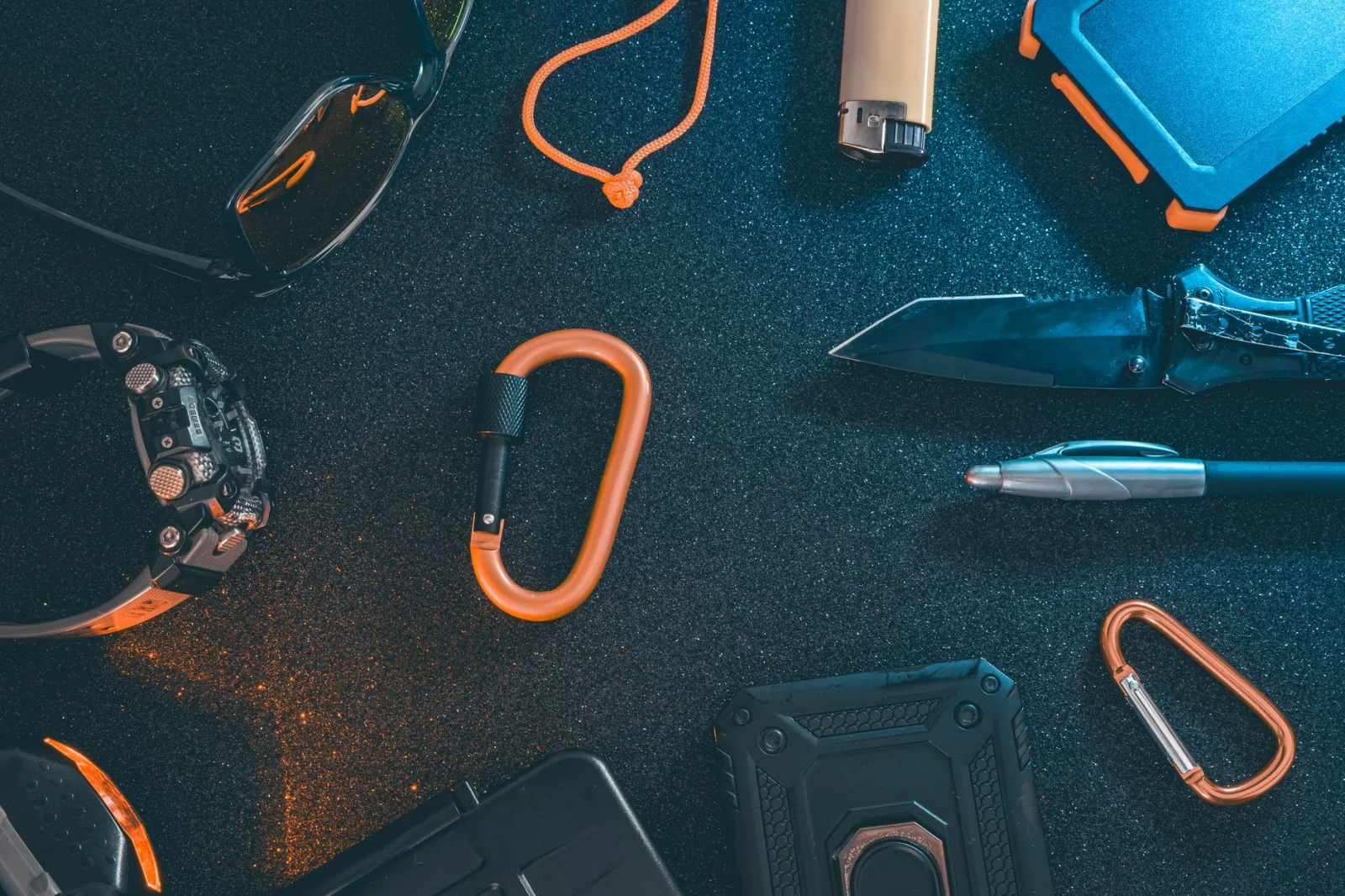
Emergency equipment is rarely exciting to buy, which is one reason it is often missing. A headlamp, whistle, compact first-aid kit and lightweight emergency shelter take little space and can transform an unplanned delay after sunset, a slow descent or a minor injury.
The headlamp is more useful than a phone flashlight because it leaves both hands free. The National Park Service specifically recommends a headlamp as the preferred light source and advises carrying spare batteries. A phone remains an important communication tool, but it should not also be asked to provide navigation, photography, emergency calls and several hours of lighting from the same battery.
A compact first-aid kit should match the climate, group size, route, remoteness, duration and personal medical needs. The American Red Cross recommends adapting pre-packed kits rather than assuming one standard kit fits every outing. The ability to use the contents is at least as important as the quantity carried.
American Red Cross: Hiking and Backpacking First-Aid Kit ↗A Practical Beginner Emergency Kit
- Small headlamp with charged batteries.
- Whistle attached somewhere accessible.
- Compact emergency bivy, survival bag or heat-reflective blanket.
- Adhesive dressings, blister treatment, gauze, tape and disposable gloves.
- Personal medication and any group-specific medical items.
- Small repair items such as tape, cable ties or a compact multi-tool.
- Charged phone in a waterproof pouch.
What You Don't Need
- A large survival knife for an ordinary day hike.
- A heavy medical kit filled with items nobody in the group knows how to use.
- Fire-starting equipment where fires are illegal, inappropriate or unnecessary.
- Specialist rescue equipment without training.
09 · OPTIONAL GEARUseful Later, Not Automatically Necessary
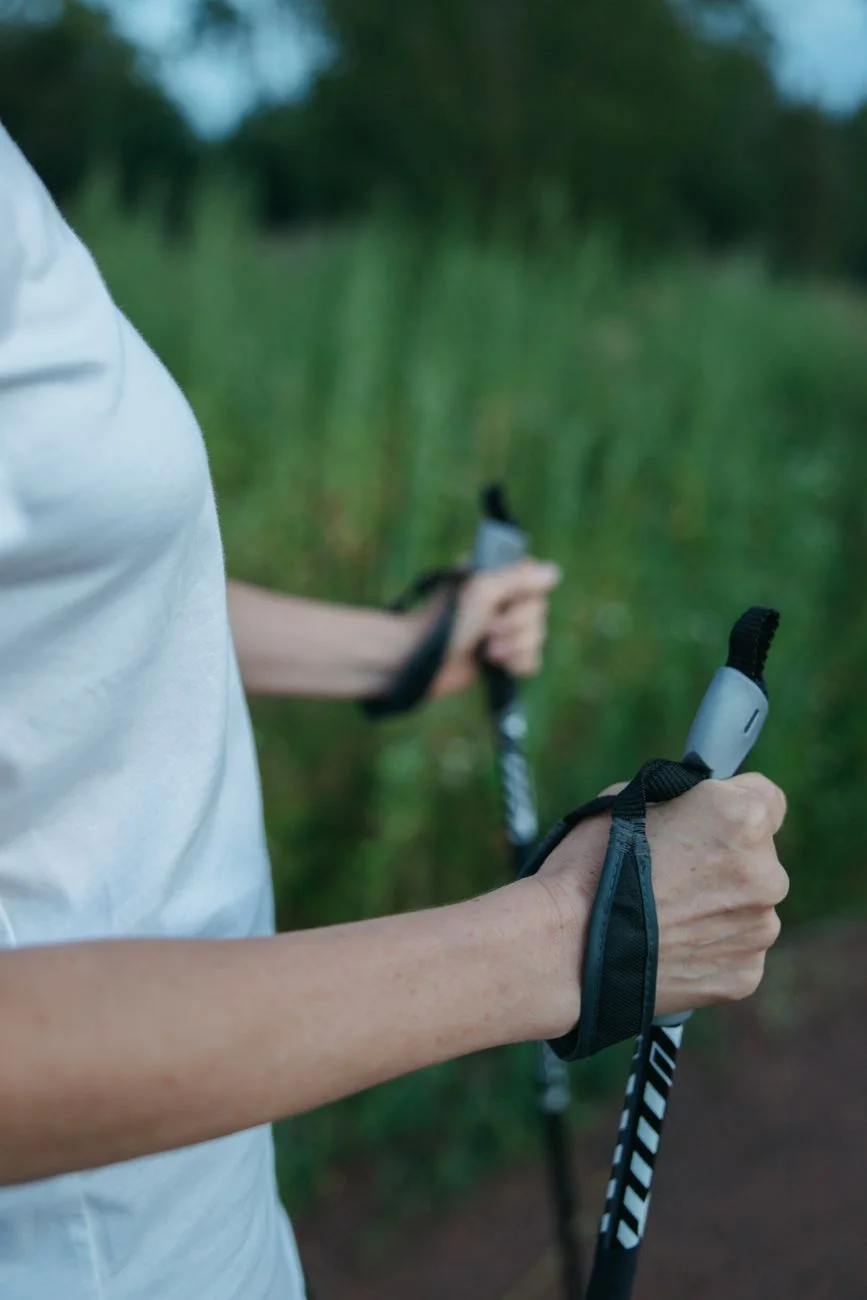
Trekking Poles
Poles can improve balance, reduce strain on long descents and help with stream crossings, snow patches or loose terrain. They are especially useful for walkers with knee discomfort or anyone carrying more weight. They are not mandatory on every path, and poor technique can make them awkward rather than helpful. Borrowing a pair is a sensible first test.
Gaiters
Gaiters keep mud, snow, water and debris out of footwear. They are useful in boggy ground, long wet grass, scree and snow. On dry, well-made trails they may spend the day in the backpack.
Satellite Communicators
A satellite messenger can be valuable for remote routes with unreliable phone coverage, solo travel and multi-day trips. It is not essential for every beginner walking near roads, villages and reliable mobile service. The device, subscription and emergency procedures should be understood before relying on it.
Hiking Watches and Dedicated GPS Devices
These can improve battery life, route recording and convenience. They do not replace route planning or navigation skill. Buy one after identifying a repeated need, not because a watch appears in every gear photograph.
Water Filters
A filter is useful when water must be collected and the route provides suitable sources. It does not create water where there is none, and it does not solve every contamination problem. For many day hikes, carrying enough treated water from the start is simpler.
10 · THE ANTI-SHOPPING LISTWhat You Probably Don't Need at the Beginning
The easiest way to waste money is to buy equipment for an imagined future rather than the walks you are already doing. Many useful products solve real problems. The beginner has not yet discovered which of those problems are actually theirs.
| Item | Why it can wait | When it may become useful |
|---|---|---|
| Heavy mountaineering boots | Too stiff, warm and heavy for many easy trails | Rough, cold, snowy or technical terrain |
| Large trekking backpack | Encourages overpacking on day hikes | Overnight trips or carrying group equipment |
| Premium expedition shell | High cost before you know your priorities | Frequent severe-weather mountain use |
| Dedicated GPS | A phone and offline map may cover early needs | Long remote routes and battery-critical navigation |
| Satellite messenger | Cost and subscription may not match local walks | Remote, solo or no-coverage travel |
| Stove and cooking kit | Unnecessary for normal day hikes | Long cold days, camping or specific meal plans |
| Large knife | Little value for ordinary marked trails | Specific bushcraft or expedition tasks where legal |
| Full ultralight system | Expensive optimisation before basic preferences are known | Frequent long-distance or multi-day travel |
| Several technical outfits | One working layering system is enough to learn from | Frequent hiking across varied climates |
11 · THREE SIMPLE SYSTEMSPack for the Consequences of the Route
| Type of outing | Core equipment | Add when relevant |
|---|---|---|
| Easy local walk | Comfortable footwear, water, snack, phone, route information, simple layer | Sun protection, rain shell, small first-aid items |
| Full-day mountain hike | Day pack, grip-focused footwear, layers, waterproofs, navigation, food, water, headlamp, first aid, whistle, emergency shelter | Poles, gloves, warm hat, power bank, physical map |
| Remote or exposed mountain day | Complete day-hike system with larger weather and delay margin | Satellite messenger, water treatment, group shelter, additional insulation, route-specific equipment |
These are not rigid lists. A short route can still require serious equipment if it is exposed, wintery or difficult to escape. A long lowland route can be simple if the weather is mild and towns, transport and shelter are frequent. Duration matters, but consequence matters more.
12 · BUYING SMARTERSpend Where Fit Matters; Borrow Where Experience Matters
The best first purchases are the items that touch the body for hours or protect against the weather: footwear, socks, backpack and shell. Fit is personal, so these are worth trying carefully. Other items are easier to borrow, rent or buy used while preferences develop.
Buy Carefully
- Footwear: test with the socks you plan to wear and allow room for descents.
- Backpack: load it with realistic weight before deciding.
- Waterproof shell: check movement, hood fit and room for insulation.
- Headlamp: prioritise simple controls and reliable battery status.
Borrow, Rent or Buy Used
- Trekking poles.
- Larger backpacks for a first overnight trip.
- Winter traction and specialist mountain equipment, together with appropriate instruction.
- Satellite communicators for occasional remote journeys.
- Equipment used only on one annual holiday.
Used gear can be excellent, particularly backpacks, poles, fleeces and durable accessories. Be more cautious with safety-critical equipment, damaged waterproofs and footwear that has already moulded to another person. Inspect condition rather than assuming a familiar brand guarantees useful life.
13 · LOW-IMPACT HABITSGood Gear Includes the Way You Use It
Preparation is not only about personal comfort. It also reduces pressure on trails, wildlife and other visitors. Carry a small rubbish bag, remain on durable surfaces where required, respect closures and local access rules, and avoid treating food scraps as harmless.
Leave No Trace summarises low-impact outdoor practice through planning, durable surfaces, proper waste disposal, leaving natural and cultural objects in place, minimising fire impacts, respecting wildlife and being considerate of others. Local regulations always take priority, but the principles provide a useful baseline.
Leave No Trace: The 7 Principles ↗14 · PRACTICAL QUESTIONSFrequently Asked Questions
Do beginners need hiking boots?
No. Many beginners can start with trail shoes, approach shoes or light hiking shoes that fit well and grip the expected terrain. Boots become more useful in rough, cold, muddy or snowy conditions, or when a stiffer sole and greater coverage are desirable.
How large should a beginner hiking backpack be?
For many easy and moderate day hikes, roughly 15 to 25 litres is enough. Longer, colder or more remote mountain days may require 25 to 35 litres. The correct size is the smallest pack that comfortably carries the real equipment and safety margin for the route.
Do I need waterproof trousers?
Not for every short fair-weather walk. They become important in prolonged rain, cold wind, wet vegetation and exposed mountain terrain. Lightweight over-trousers are a sensible first option.
Is a phone enough for navigation?
A phone with downloaded offline maps can be sufficient for simple, well-marked routes. On remote, long or complex routes, add a backup method and the skills to use it. Battery management and route preparation are part of the navigation system.
Should I carry a first-aid kit on a short hike?
A small kit is sensible even on ordinary day hikes. Tailor it to the group, route and medical needs rather than carrying a large generic kit. Blister treatment, basic wound care and personal medication are common priorities.
Are trekking poles worth buying?
They can help on long descents, loose terrain and stream crossings, and some walkers find them valuable for knee comfort. Borrowing a pair before buying is a good way to learn whether they suit your walking style.
When does a satellite communicator make sense?
It becomes more valuable on remote routes, solo trips and journeys with unreliable mobile coverage. For local trails near roads and towns, it may be unnecessary. Understand the subscription, check-in system and emergency process before relying on one.
What is the one item beginners most often forget?
A small headlamp is a common omission. Walks take longer than expected, phones lose battery and daylight changes through the season. A headlamp is light, inexpensive and useful without requiring an emergency to justify carrying it.
15 · FINAL THOUGHTSBuy Less, Learn Faster
A beginner does not need to look like an experienced mountaineer. The useful goal is quieter: to understand the route, carry a small margin for weather and delay, and finish the day knowing which part of the system worked and which part should change next time.
Good gear becomes visible through repetition. The shoes that never create a hot spot, the shell that is always in the pack, the headlamp that still has power and the map downloaded before the signal disappears are more valuable than equipment chosen to complete an image.
Start with footwear, a modest pack, simple layers, weather protection, navigation, water, food, light and a compact emergency kit. Borrow the rest. After a season of real walks, the next purchase will usually be obvious - and far more likely to solve a problem you genuinely have.